As AI-powered search, assistants, and autonomous agents become more common, website owners are looking for ways to make their content easier for machines to consume.
One question comes up frequently:
Should websites provide content in Markdown for AI systems?
The short answer is yes, but how you do it matters.
Why Markdown Matters
AI systems can read HTML, but HTML often contains a lot of extra information such as navigation, styling, scripts, and layout markup.
Markdown provides a cleaner, more structured version of the same content, making it easier for AI systems to process while reducing unnecessary overhead.
Common Approaches
There are three main ways websites can provide Markdown:
1. Bot Detection
Some websites detect AI crawlers and serve Markdown only to those bots.
While possible, this approach requires ongoing maintenance because user agents change frequently and new AI bots appear regularly.
2. Separate Markdown Pages
Another option is to create dedicated Markdown resources, such as:
- llms.txt files
- Separate
.mdpages - Parallel Markdown URL structures
The downside is that you now have two versions of the same content to maintain, increasing complexity and the risk of content becoming inconsistent.
3. Content Negotiation (Recommended)
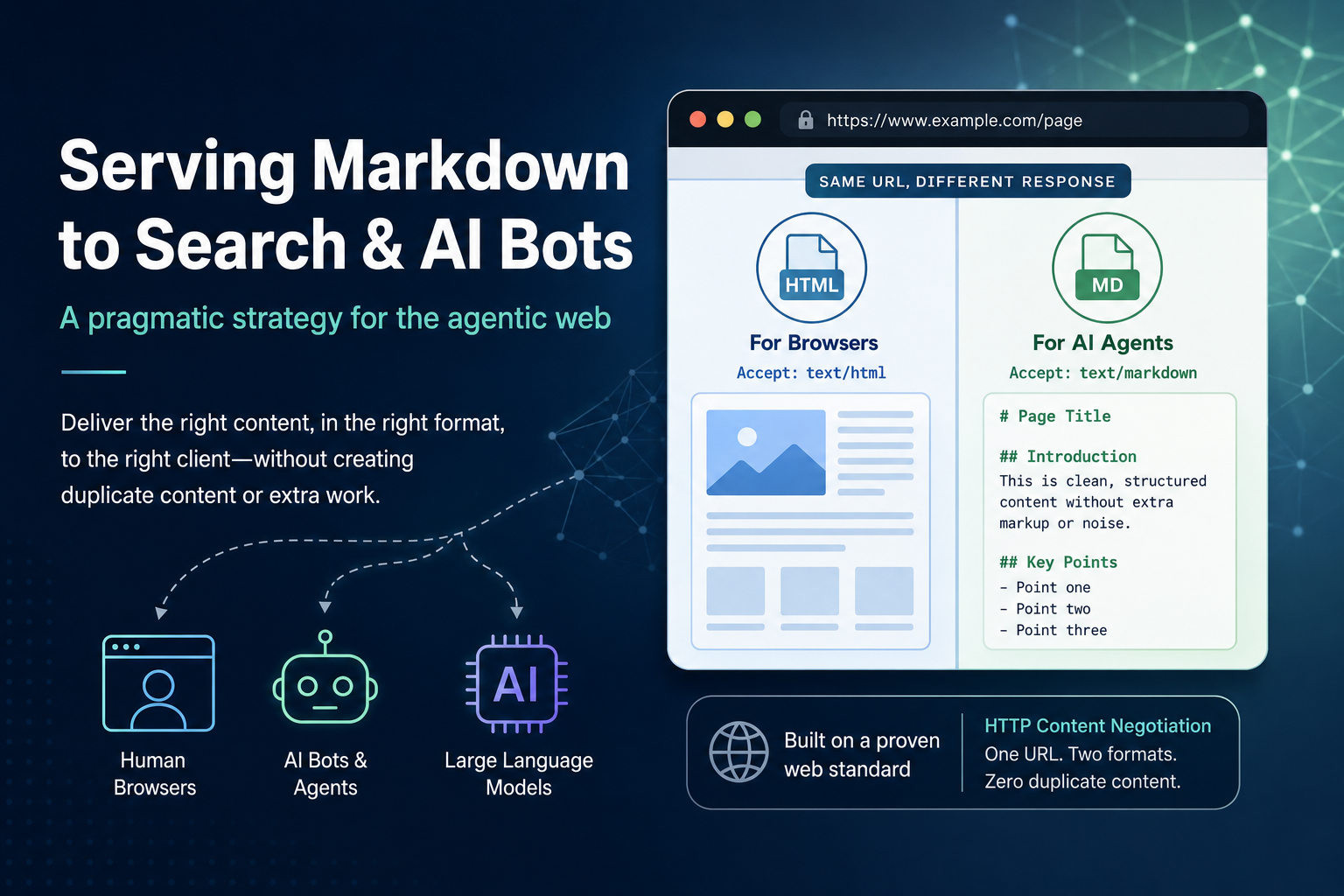
A cleaner approach is to use HTTP content negotiation.
With this method:
- Browsers continue to receive HTML.
- AI agents can request Markdown.
- The same canonical URL is used for both formats.
- Only one source of truth needs to be maintained.
For example, an AI agent can request:
Accept: text/markdownAnd the server responds with:
Content-Type: text/markdownThis follows existing web standards and avoids duplicate content issues.
Why It’s SEO-Friendly
Content negotiation keeps the canonical URL unchanged and does not create separate indexable pages.
Search engines continue to receive standard HTML, while AI systems can access Markdown when they explicitly request it.
This makes it possible to support both humans and machines without affecting existing SEO foundations.
Growing Adoption
Support for Markdown delivery is growing across the web.
Companies such as Cloudflare and Vercel have introduced solutions that use content negotiation to provide AI-friendly content, and some AI tools are already requesting Markdown through HTTP headers.
Final Thoughts
If you’re exploring ways to make your website more AI-friendly, content negotiation is currently one of the simplest and most scalable approaches.
Rather than maintaining separate AI content layers, you can serve Markdown only when requested while keeping a single canonical URL and source of truth.
It’s a standards-based solution that helps prepare your website for the growing role of AI in content discovery and consumption.